
The Villages of the Luberon: Our Take on the North Side
There are two ways to discover the Luberon.
The more familiar one follows the route linking the most emblematic villages, stopping wherever guides and blogs recommend.
The second way is to take your time. To stop in each village, long enough to feel its rhythm.
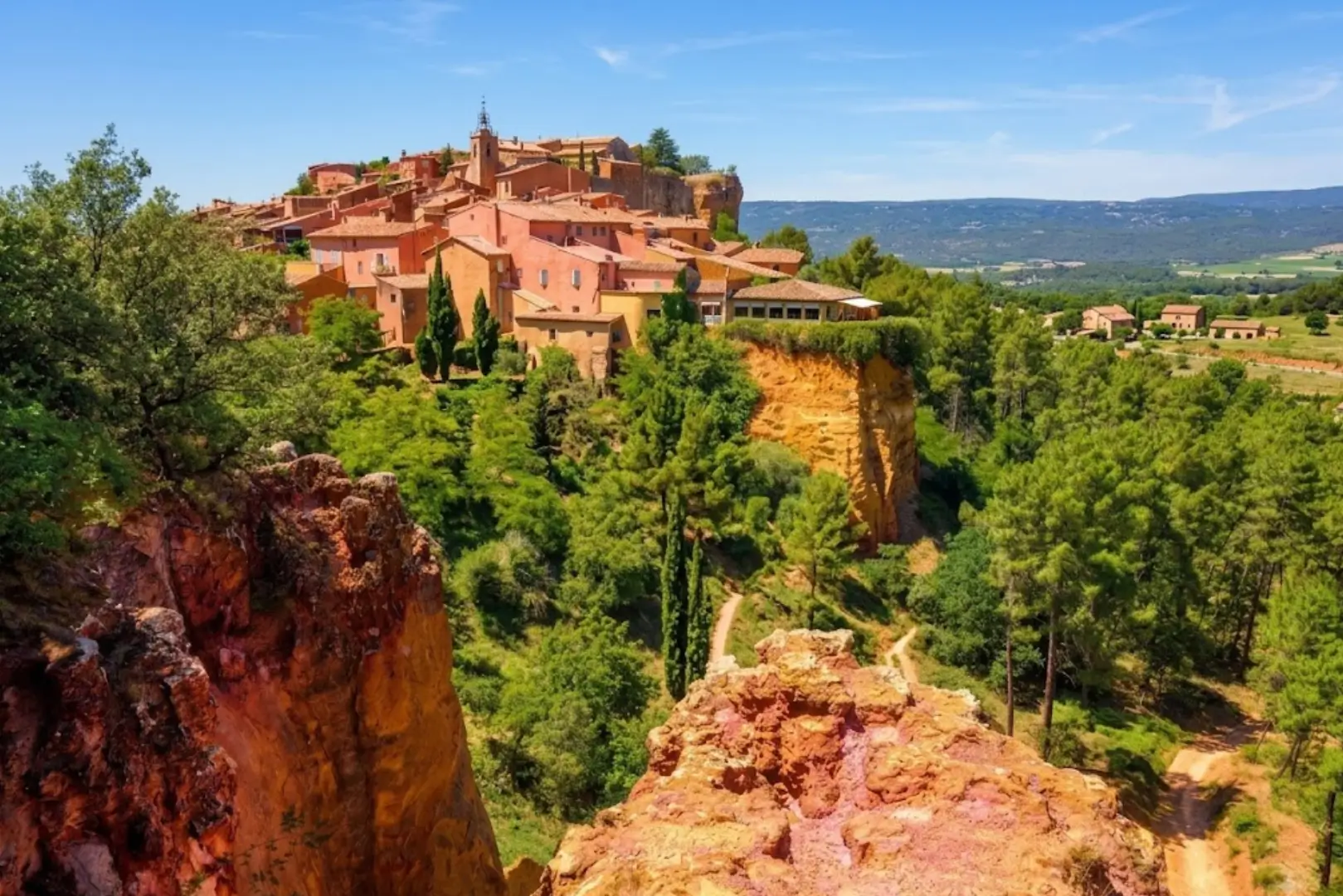
The north side of the Luberon has a rhythm all its own. The villages cling to the foothills of the Monts de Vaucluse, facing the Calavon valley, and this position still shapes them today — you can feel it in the way the streets climb, in the stone that holds the day’s warmth well into the evening.
These are villages you inhabit more than you visit.
Here is our take on these villages of the Luberon, the one we share with guests who stay long enough to want to go beyond the first impressions.
Gordes and Its Surroundings
Gordes is ranked among the most beautiful villages in France, and it shows.
The village is at its best at sunset, when the light catches its Renaissance château overlooking the valley.
Coach tours tend to arrive by mid-morning, and the village comes alive.
What’s less visible is everything that surrounds Gordes.
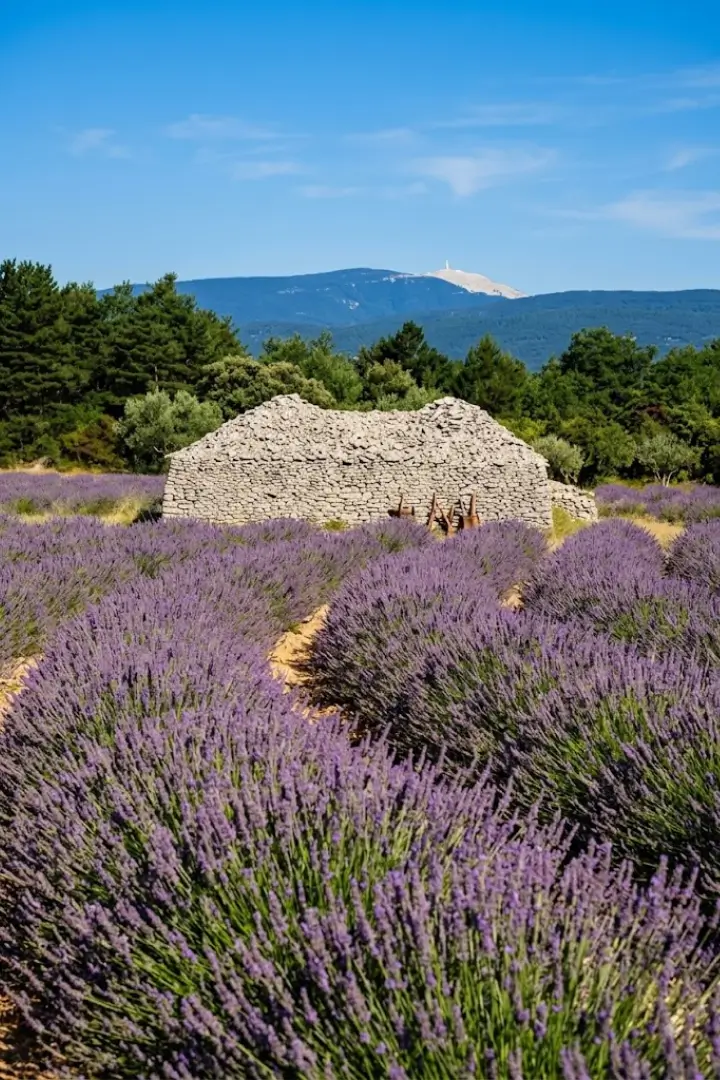
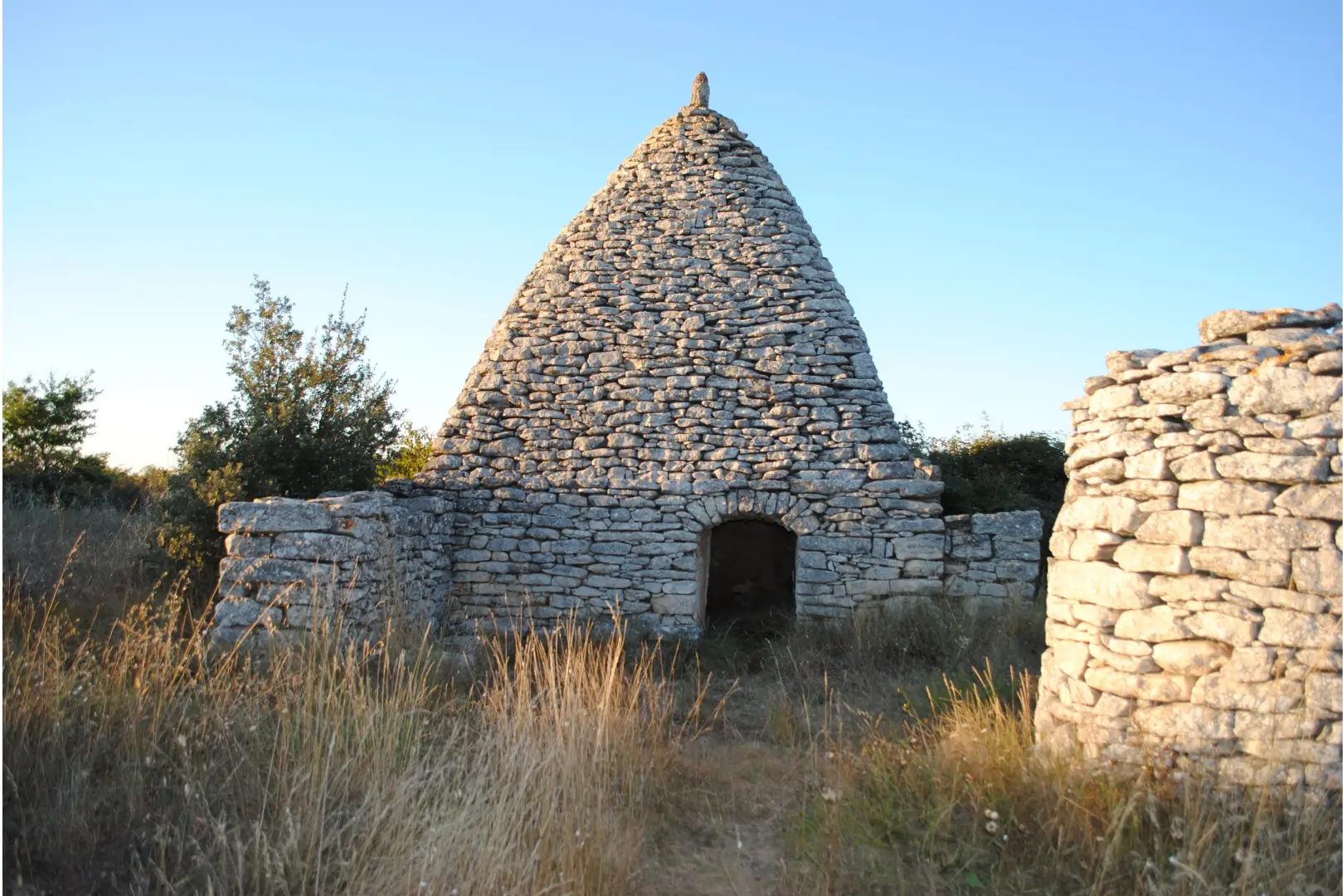
The commune counts more than 400 bories.
Bories are dry-stone huts, built without mortar, held together purely by the balance of the stones.
The Village des Bories, barely four kilometres below Gordes, gathers around thirty of them — all listed as historic monuments.
Here, you get a sense of how people farmed the land before running water arrived.
It’s a place that invites quiet.
Take your time walking through it.
Our tip: come at the end of the day, once the groups have left. The light on the dry stone is different, and the silence returns all at once.
Roussillon and Its Colour
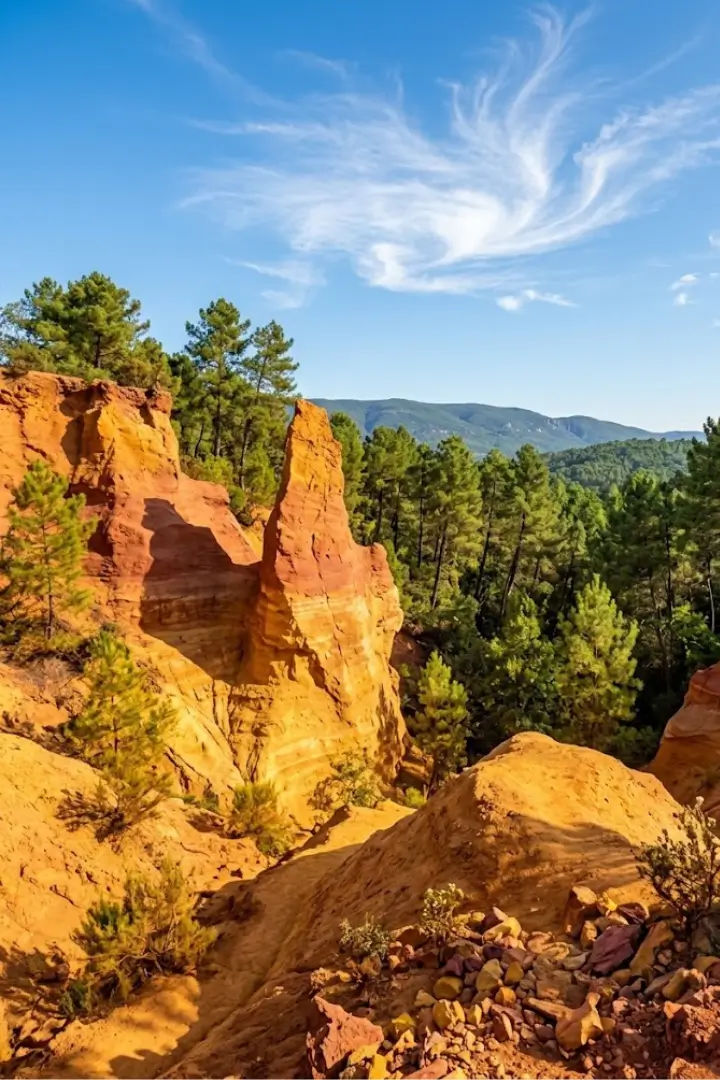
Roussillon sits on the largest ochre deposit in Europe.
It’s what gives the village’s façades their unmistakable colours, from bright yellow to deep red, and it once helped sustain the village when farming alone wasn’t enough.
The old ochre processing plant closed its doors in 1963.
It’s now home to the Conservatoire des Ocres, a visit we happily recommend to understand where this colour comes from before seeing it out on the land.
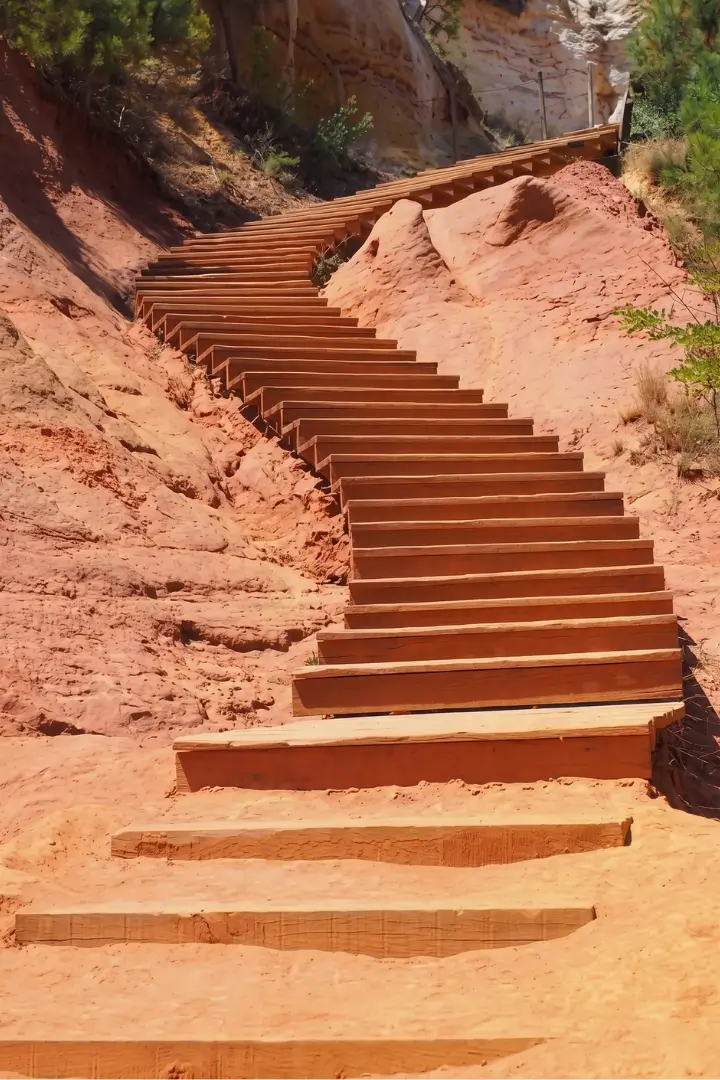
The Sentier des Ocres offers two routes — one around thirty minutes, the other around fifty.
Either one is worth it for Roussillon.
Our tip: the ground is uneven, and the many steps can make it difficult with a pushchair or for visitors with reduced mobility. On the day of your visit, avoid white clothing too. Ochre clings to shoes and hems, and it doesn’t come off easily.
Joucas and Lioux, the Two Quiet Ones
There are villages people don’t talk about much.
Sometimes that’s exactly their charm.
Joucas, for one, sits on a rise in the Monts de Vaucluse, right across from the ochre cliffs.
Its narrow, cobbled lanes climb toward the church, past a handful of artists’ workshops that open their doors along the way.
There’s room to breathe here, without feeling lost in the crowd.
There’s also a market on Monday mornings (April to October) — a good reason to make the detour.
The village of Lioux is even quieter than Joucas.
It amounts to little more than a few streets set against the Falaise de la Madeleine, a striking rock face nearly seven kilometres long, rising as high as eighty metres in places. Enough to test a few calves.
From a distance, it reads as a simple line across the landscape.
Up close, you feel how small you are against its scale.
These are two villages we often recommend to our concierge clients hosting guests who want something beyond the usual routes.
Those who make the trip tend to tell us about it afterwards.
That’s part of why we wanted to share them with you.
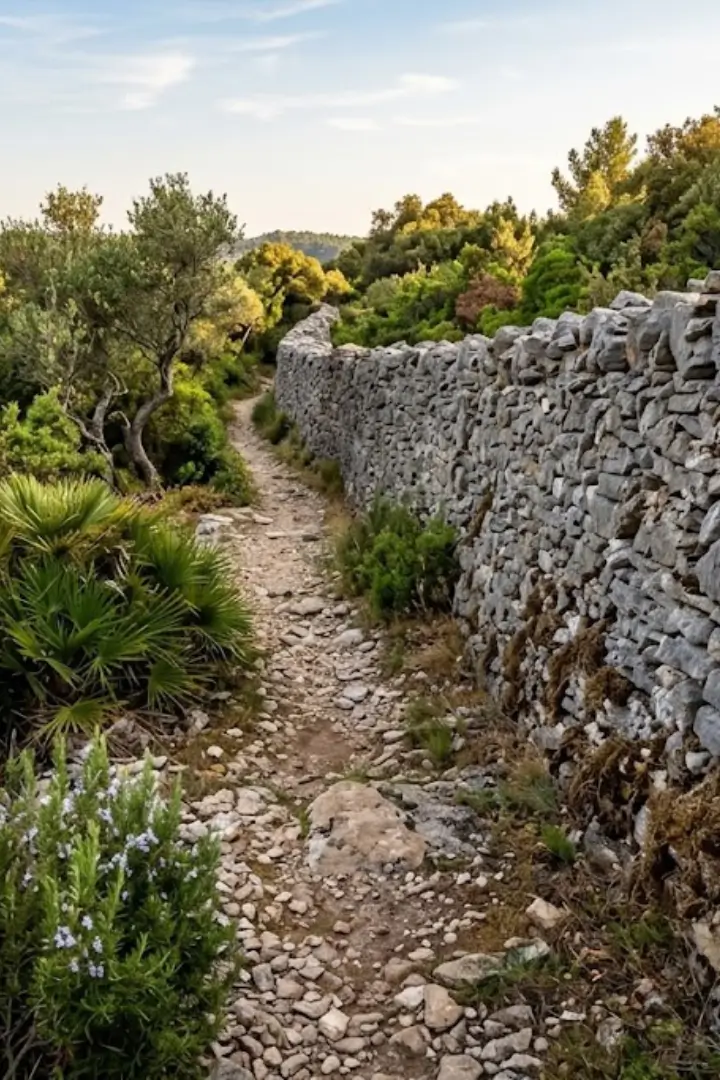
Cabrières-d’Avignon and the Plague Walls
North of the village, a dry-stone wall winds for several kilometres across the hills; a marked trail now runs alongside its old sentry posts.
The wall was built in the 18th century in an attempt to stop the plague spreading from Marseille.
You can walk it today in the shade of the oaks, and this simple bit of history gives the walk real weight.
The village itself is worth lingering in.
Its lanes are quiet, and its old château keeps a character the more animated neighbouring villages don’t always have.
Our tip: this is an easy, mostly shaded walk — ideal on the days when the heat makes the perched villages harder going. Cabrières-d’Avignon is quiet enough that you’ll usually cross paths with more lizards than visitors.
Goult, Up on the Hill
Goult sits right in the middle of everything, and yet people often drive past without stopping.
That’s a mistake.
From up here, the view over the Calavon valley and the Luberon massif is one of the most open on the whole north side.
The vaulted lanes climb up to the old mill, then wind back down toward the Conservatoire des Terrasses de Culture, where dry-stone terraces still trace the shape of generations of farming.
It’s a village well suited to a pause between busier stops — less bustle, more room to breathe.
Our tip: come on Thursday morning, market day. It’s the best way to understand why Goult is worth stopping for.
Where to Start
A village is best visited once you know what time to arrive.
And where to enter it.
That’s part of our work as a local concierge team that isn’t always obvious from the outside: knowing that parking in Gordes gets difficult after ten o’clock, that a mistral day changes a walk completely, or that the best table is sometimes a few hundred metres from the old centre where you’ll be at midday.
We can even point you toward a good wine estate on your way back.
We know these villages all year round, because we live among them —
including when they’re empty and the light falls differently, sometimes even more beautifully, once the season has passed.
In September, we’ll be sharing more villages of the Luberon worth visiting, this time on the south side.
Whether you own a home here or are simply passing through, feel free to write to us before you arrive.
We’re here to tell you where to start.