
The Perched Villages of the Luberon: Our Take on the Other Side
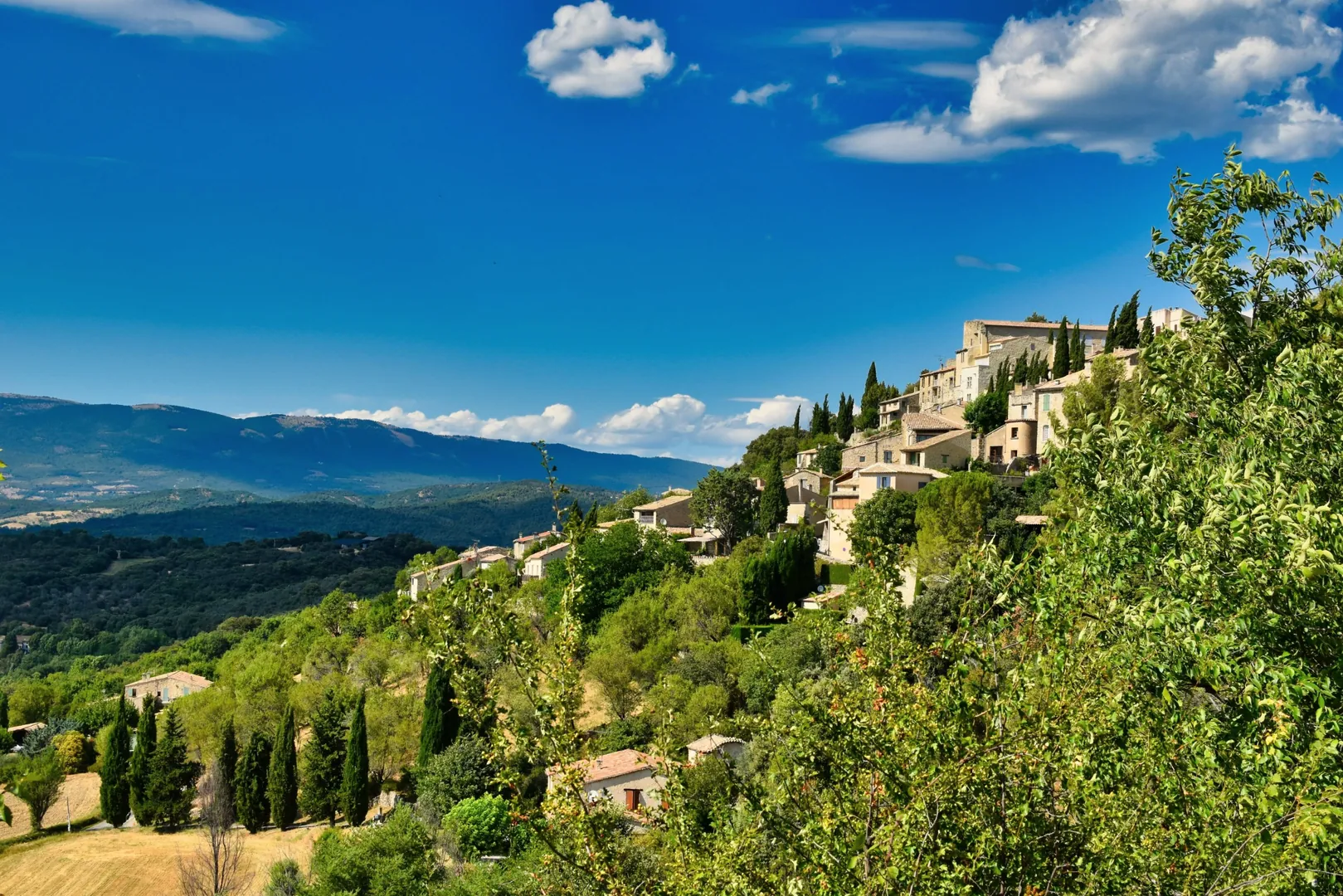
From the heights of Gordes, the view stretches well beyond the Calavon valley. Along the slopes of the Luberon, several villages stand out against the landscape, from Oppède to Saignon.
In a first article, we took you to discover the north side of the Luberon, through the villages nestled on the foothills of the Monts de Vaucluse.
This time, we cross the valley to reach the villages perched on the heights of the Luberon massif.
Here, the lanes climb the hillsides, the views open onto the valley and, at times, as far as Mont Ventoux. A few steps are often enough to leave the lanes behind and join the paths that wind through the hills.
Here is our take on this other part of the Luberon, the one we like to share with guests who wish to continue exploring the region, far from the most conventional routes.
Sénanque, Before We Cross
Before crossing the valley, one last stop on the north side is a must: Sénanque Abbey.
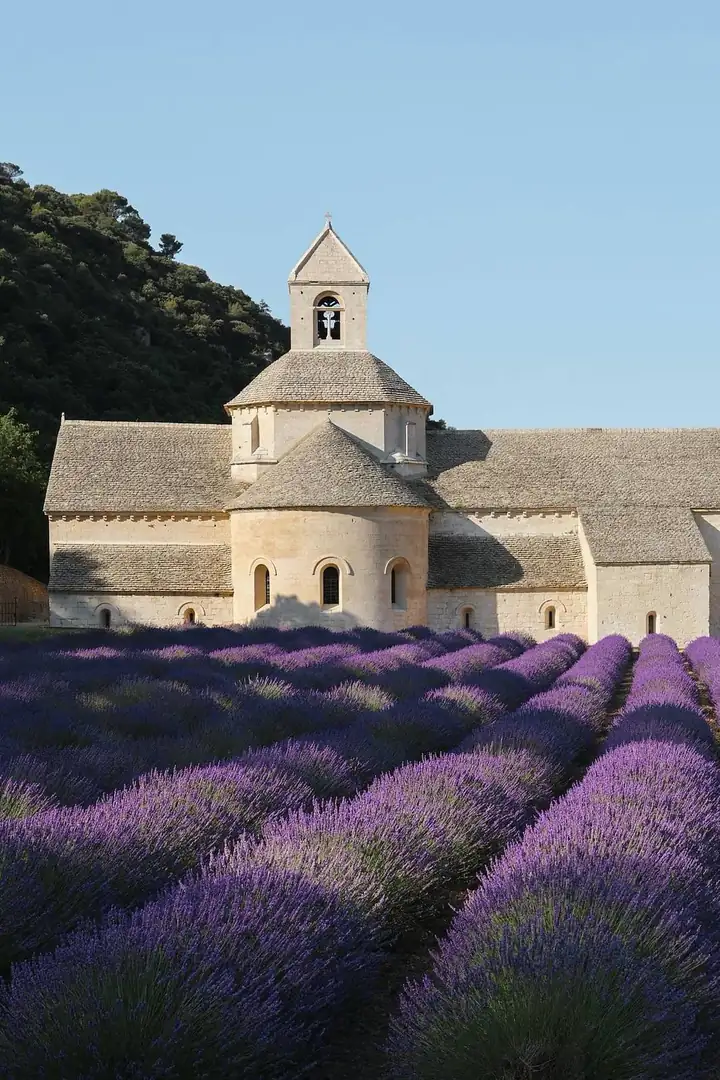
From Gordes, a small road winds down to the end of a valley, where the abbey comes into view, sober and majestic. Founded in 1148 by Cistercian monks, it still houses a religious community today, preserving the spiritual vocation of the place.
In summer, from late June to mid-July, the lavender fields bloom around the abbey. It is the emblematic image of Sénanque and well worth the detour. The fields are, however, to be admired from the path, without stepping into them.
Our tip: come early in the morning, before the groups of visitors arrive. The valley is still peaceful and you can fully enjoy the serenity of the place. Please also wear clothing that covers your shoulders and knees to visit the abbey.
Oppède-le-Vieux, a Village You Have to Earn
Once across the valley, our route begins at Oppède-le-Vieux, a village best discovered on foot.
From the car park below, cobbled lanes climb between restored houses and old buildings gradually overtaken by vegetation. Around a staircase or a bend in the lane, the view opens onto the surrounding countryside and invites you to slow down.
Long abandoned by its inhabitants, who moved down to the plain, the old village gradually came back to life during the last century, thanks in particular to the artists who settled there.
At the top, the collegiate church and the remains of the castle overlook the plain. On a clear day, the panorama stretches as far as Mont Ventoux, amply rewarding the effort of the climb.
For hiking enthusiasts, several waymarked paths lead up to the heights of the Petit Luberon, or offer a gentler walk through the vineyards, in particular along the vineyard trail.
Our tip: visit in the morning, before the heat sets in. The lanes are still cool and the atmosphere particularly peaceful. The climb is short but quite steep, and the cobbles can be slippery, so wear good shoes.
Ménerbes, on Its Ridge
A few minutes from Oppède-le-Vieux, Ménerbes stretches along a narrow ridge above the vineyards. Ranked among the Most Beautiful Villages of France, it charms with its lanes lined with handsome old houses, its artists’ studios and its views over the valley. At the far end of the village, the view opens wide onto the Monts de Vaucluse.
Just below, the Domaine de la Citadelle is home to the Corkscrew Museum and its collection of some 1,200 pieces. An original visit, which can be extended with a tasting of the estate’s wines.
Our tip: after discovering Oppède-le-Vieux, make the most of your time in Ménerbes to stop for lunch before visiting the Corkscrew Museum. Its opening hours can vary with the season, so we can check them for you and help you organise this stop.
Lacoste and Bonnieux, Face to Face
Continuing east, two villages face each other, each perched on its own hill.
Lacoste rises up the hillside to the ruins of the Marquis de Sade’s castle. Today, the village is home to many artists’ studios and to the Savannah College of Art and Design, an American art school set in several historic buildings. Its steep lanes and preserved atmosphere invite you to explore on foot, from one small square to the next, among stone façades.
Bonnieux, for its part, stretches from the plain up to its old church, surrounded by century-old cedars. From the heights, the view opens onto Lacoste and, further away, onto Gordes and the Monts de Vaucluse. Lively all year round, the village has plenty of shops and great places to eat. It is also an interesting starting point for exploring the surrounding area.
Above Bonnieux, on the heights of the Petit Luberon, the Cedar Forest offers lovely shaded walks, especially welcome in summer. A little further on, towards Buoux, the Aiguebrun valley is another walking option, in a cooler, greener setting.
Our tip: in summer, remember to check the conditions of access to the massifs the day before your outing. They can change depending on the fire risk. We can also take care of this for you, to help you organise your excursion.
Saignon, Above Apt
Further east, above Apt, Saignon is probably one of the most discreet villages on this route. Clinging to the side of the Luberon, it stands out for its imposing rock, which from a distance could almost be mistaken for a castle.
The Rocher de Bellevue, some thirty metres high, can be reached by a staircase leading to its summit. A viewing table offers a vast panorama over the Calavon valley, Mont Ventoux, the Lure mountain and, on a clear day, as far as the peaks of the Alps.
The village is then best discovered along its lanes and fountains, as far as the Romanesque church of Notre-Dame-de-Pitié, built as early as the 11th century, slightly set apart from the houses.
Our tip: go towards the end of the day to climb the Rocher de Bellevue. The temperatures are more pleasant and the late-afternoon light brings out the contours of the valley. The climb is short, but it can be daunting for anyone prone to vertigo.
Lourmarin, on the Other Side of the Mountain
To reach Lourmarin, the road through the combe winds between the reliefs of the Petit and Grand Luberon, offering a lovely transition to the south side.
Here, the landscape opens up and Lourmarin reveals a different atmosphere. Ranked among the Most Beautiful Villages of France, it has the feel of a Provençal market town, with its terraces, its bookshops and its boutiques.
A few steps from the centre, its Renaissance castle also deserves a visit. Lourmarin is also closely linked to Albert Camus, who bought a house there in 1958 and now rests in the village cemetery.
The atmosphere changes noticeably depending on when you visit. On Friday mornings, market day, the streets and squares come alive. On weekdays out of season, Lourmarin returns to a quieter pace.
Our tip: discover Lourmarin on a Friday morning to enjoy its market, then come back one evening for dinner on a terrace. Two opportunities to appreciate the village from different sides.
Where to Start?
To make the most of each stop, it is better not to try to see everything in a single day. Oppède-le-Vieux and Ménerbes work well together in one outing, as do Lacoste and Bonnieux. Saignon and Lourmarin, further away, deserve more time.
That is also our role with our guests: helping them put together an itinerary suited to their wishes, the season and the weather. We can recommend a table for lunch, arrange a tasting at a wine estate or even organise a private driver so you can make the most of the day.
And because the Luberon shows a different face with the seasons, we also invite you to read our article on the Luberon out of season.
Each village has its own character, each season its own particularities. All that remains is to choose where to start.
Contact us before you arrive: we will be delighted to help you discover the Luberon.